
Play Therapy
Children don’t yet have the brain development or vocabulary to name and process their feelings, so talk therapy can be frustrating because it asks a child to do something outside of their capacity. Your child’s first and most natural way of expressing herself, learning about the world, engaging in relationships, and exploring her inner world is through playing. Play is how children engage the world: intellectually, emotionally, socially, and spiritually.
Play therapy speaks a child’s language and allows supporting adults to witness and translate their inner world, which informs their loving caregivers how to better parent, discipline, guide, and support them.
How it works:
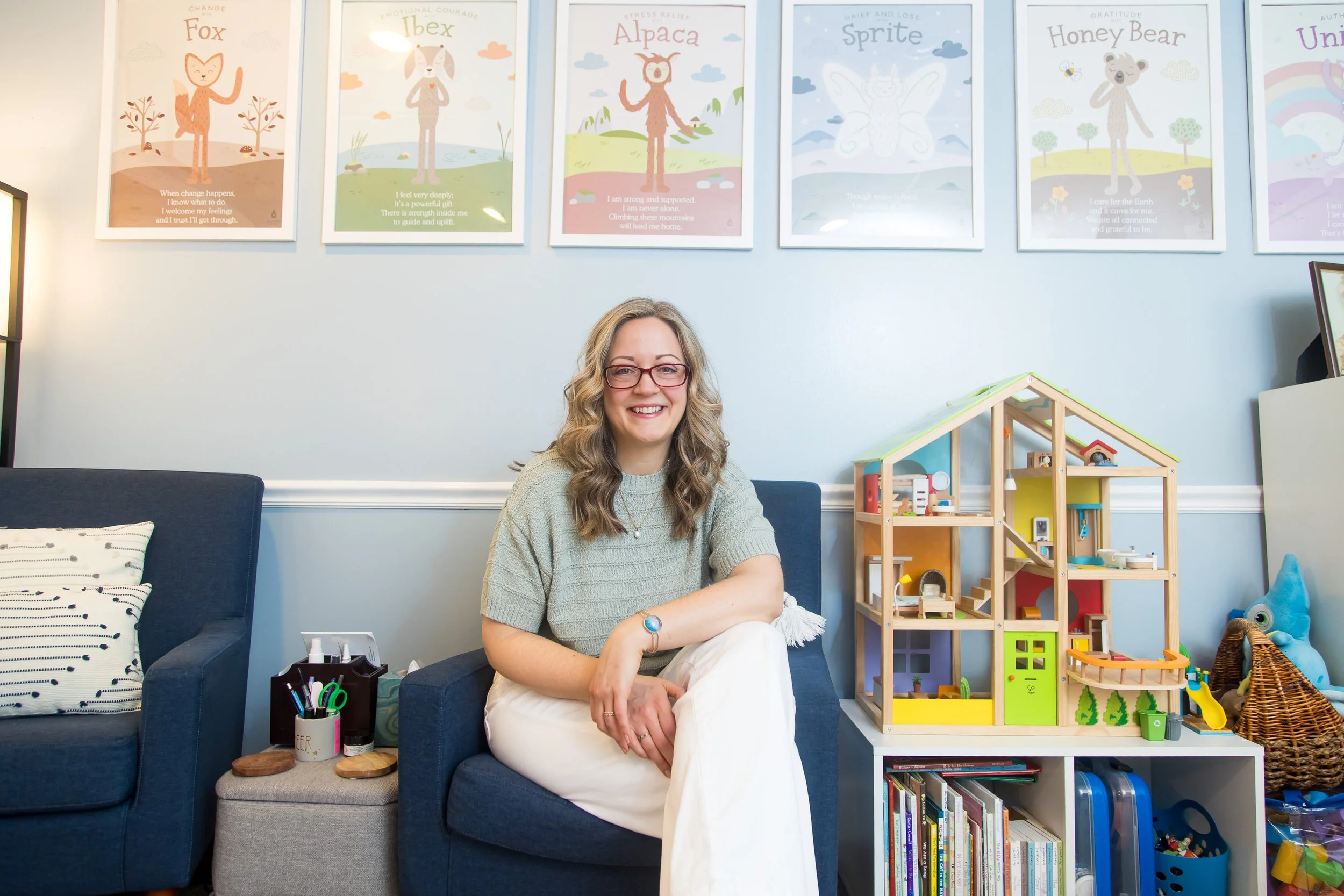
You as a parent are integral to the process of therapy with your child. Because of the unique needs of a child, this kind of therapy requires parent involvement. This means you as a parent will be meeting with me for sessions too! You can expect to meet with me for several sessions during the intake process and at regular intervals during the therapy process. At the very least, I will see you, the parents, without your child, at least once after every three child or parent-child sessions.
I will use part of our parent-only sessions to update you on your child’s play themes, and we will explore together what they may be indicating about your child’s inner world.
These parent sessions will be extremely valuable for your child. Child play therapy sessions, combined with regular parent sessions for learning and growth, will deepen your parent-child connection, grow your child’s emotional intelligence and regulation, and decrease negative behaviors.
I offer three modalities of play therapy:
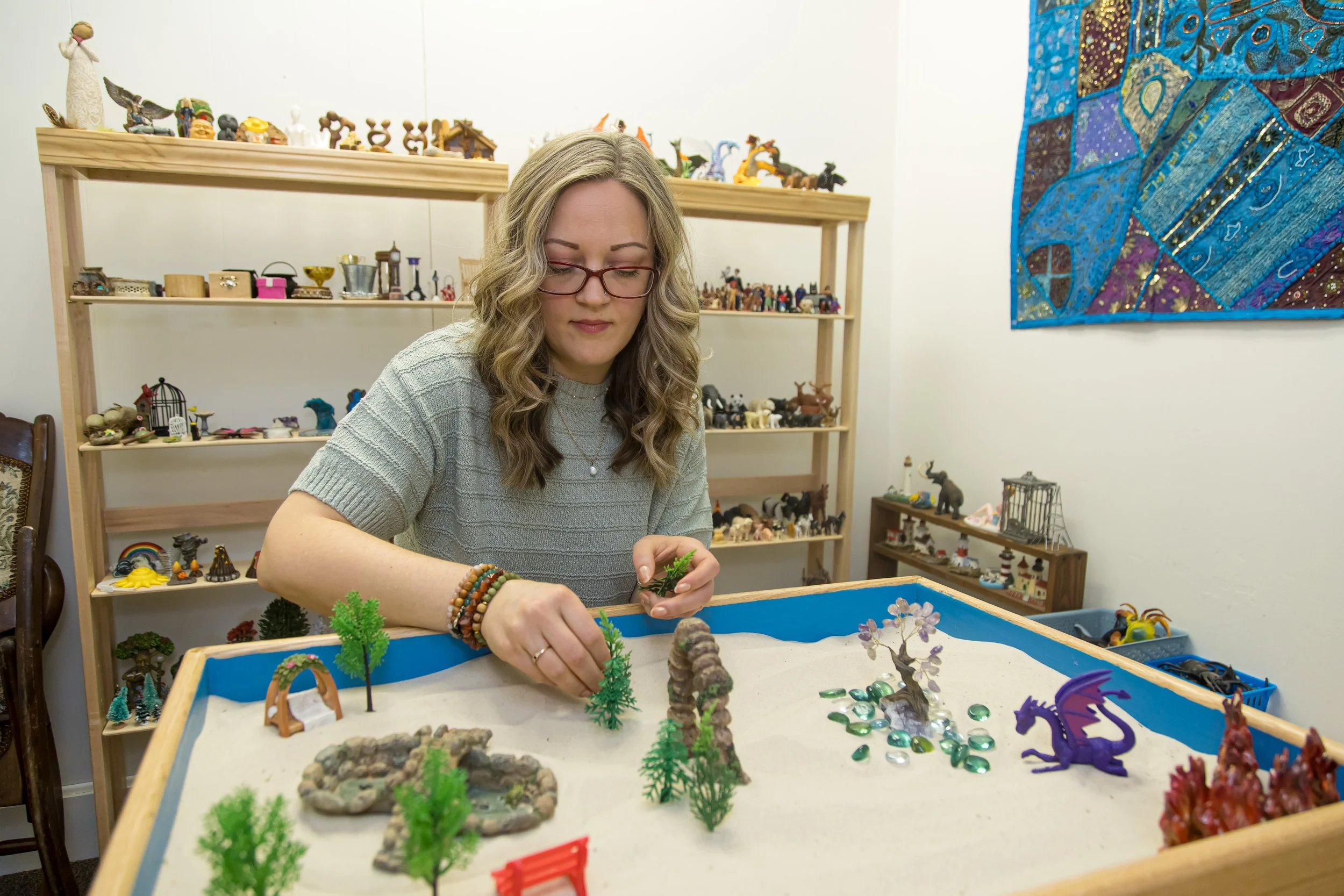
Sandtray
Sandtray is a play therapy modality grounded in a container of sand, an essential earth archetype, and invites the child to choose from a variety of miniature figures and construct a world with them in the sand, telling a story through the items they choose. During these sessions, I will interact with your child using play as a means of connecting, witnessing, understanding, and supporting through whatever is bothering her. It’s a fluid process, evolving in real time and trusting as a story unfolds in each moment. We may talk directly about the issues as much or as little as is needed and appropriate for your child’s developmental level.
This modality is not just a child-based modality! It is also useful and supportive for teens, adults, families, and groups.

Child-Centered Play Therapy (CCPT)
Child-Centered Play Therapy (CCPT) is a modality that trusts the child’s innate capacity for healing when given a safe environment, the right tools, and a compassionate witness. In CCPT, the toys are the words, and play is the language. CCPT trusts the child to lead, the process to transform, and a skilled, compassionate therapist to witness, follow and respond in ways that honors the child’s desire to grow, even when they are going through something hard.
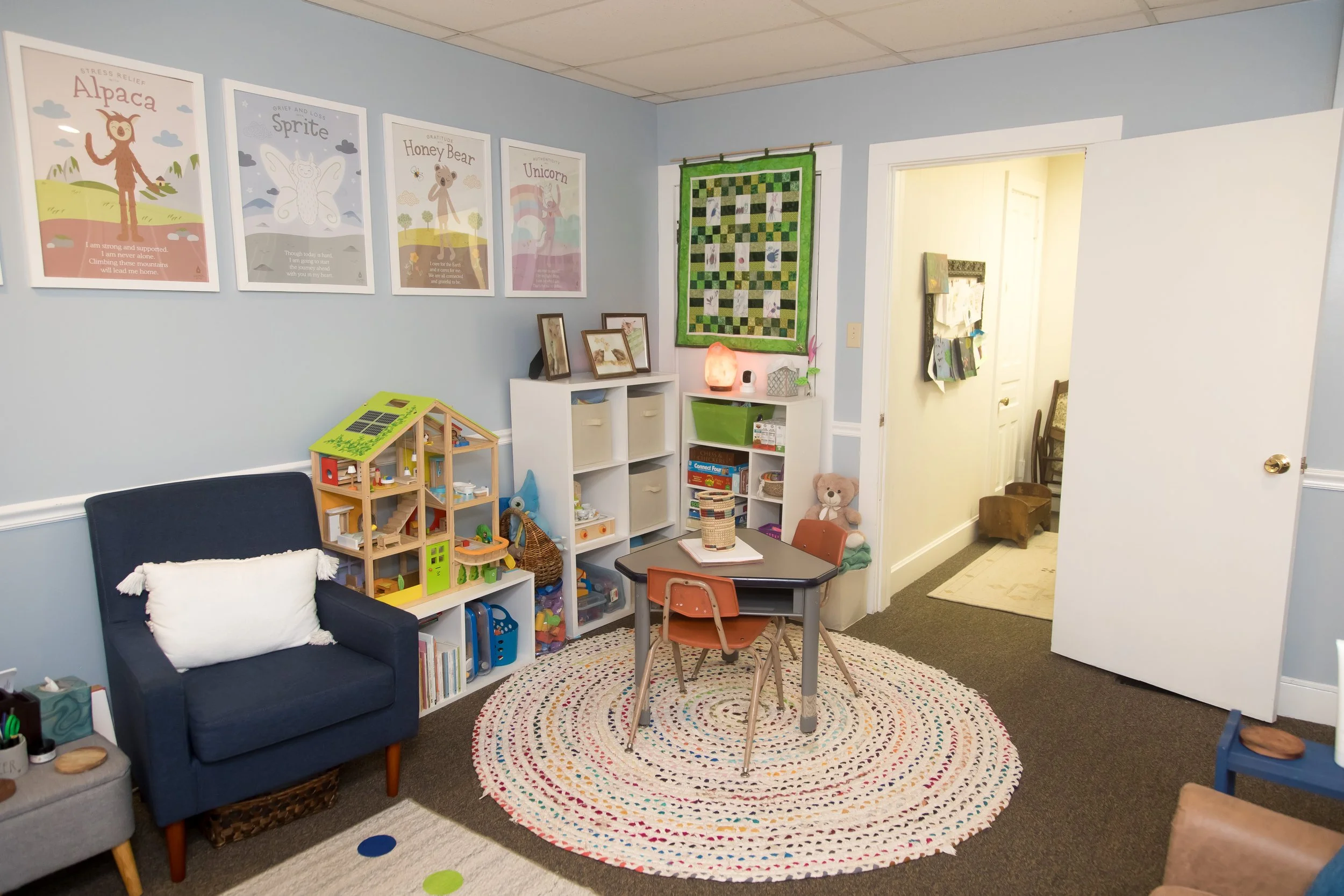
Practically, this modality can utilize a sand tray as well, but also utilizes the space, the relationship, and a variety of play mediums (dollhouses, art supplies, stuffies, and more) to move through the process of uncovering what is under the surface, allowing space and capacity for your child to heal and grow.
Attachment-Focused Therapy (Theraplay™/IAFT)
Theraplay™ and Integrative Attachment Family Therapy (IAFT) are therapist-guided play therapy modalities that involve the parent and child together in a family session. The purpose of these therapies are to repair, deepen or create more harmony in the parent-child relationship. This could include anyone from parents and children in adopted families to parents and children with widely different temperaments. In these sessions, we use small play interactions to mimic the main components of secure attachment. The components we focus on in these sessions are: structure, engagement, nurture, and challenge, as well as the PACE parenting method.
When children learn positive messages about these four elements, they start to relate to themselves, to others, and to the world in a more secure way. Parents also leave these sessions with a deeper understanding of their child, and with greater capacity to relate to them in a way that feels secure, harmonious, and connected, having nurtured and practiced the skill and self-trust, both to respond to their child, and to understand themselves and what they can offer as parents in a more deep and dynamic way.